The 2027 numbers
| Item | 2026 | 2027 |
|---|---|---|
| Cost-of-living adjustment (COLA) | 2.8% | 3.6% |
| Medicare Part B standard premium | $202.90 | $209.40 |
| Medicare Part B deductible | $283 | $292 |
| Maximum earnings subject to Social Security tax | $184,500 | $192,300 |
The Social Security Administration announced the 3.6% COLA on October 14, 2026 — the largest increase in several years. SSA estimated the average retirement benefit will rise by about $75 a month.
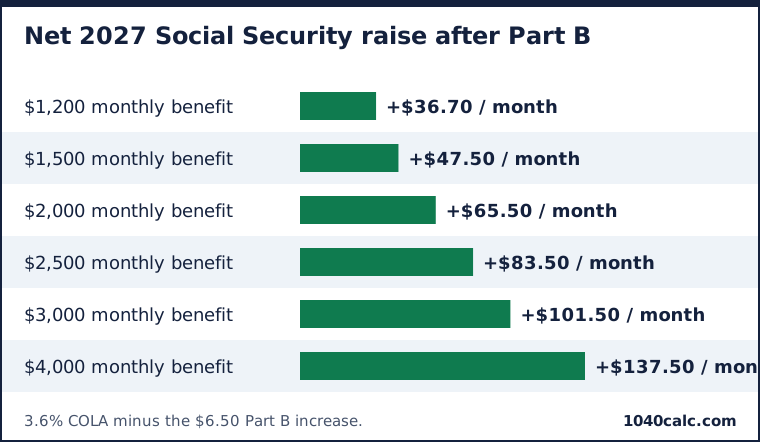
Your increase after Medicare
Most retirees have the Part B premium deducted from their Social Security check. Because the premium rises $6.50, the net increase is the COLA minus $6.50.
| 2026 monthly benefit | 3.6% COLA | 2027 benefit | Net change after Part B |
|---|---|---|---|
| $1,200 | +$43.20 | $1,243.20 | +$36.70 |
| $1,500 | +$54.00 | $1,554.00 | +$47.50 |
| $2,000 | +$72.00 | $2,072.00 | +$65.50 |
| $2,500 | +$90.00 | $2,590.00 | +$83.50 |
| $3,000 | +$108.00 | $3,108.00 | +$101.50 |
| $4,000 | +$144.00 | $4,144.00 | +$137.50 |
SSA rounds benefits down to the dime and payments down to the dollar, so your deposit may differ by a few cents. Enter your exact benefit in the Social Security COLA calculator.
Higher-income beneficiaries pay more for Part B through IRMAA — up to $711.80 a month in 2027 — which can wipe out the COLA entirely.
When the increase arrives
- Social Security: starts with benefits paid in January 2027 (the December 2026 benefit, paid in January).
- SSI: the increased payment arrives December 31, 2026, because January 1 is a holiday.
- SSA sends a COLA notice by mail and to your my Social Security account in December showing your new amount.
Will the raise increase my taxes?
Possibly a little. Up to 85% of benefits can be taxable once your “provisional income” — half your benefits plus other income — exceeds $25,000 single or $32,000 married filing jointly. Those thresholds have never been indexed, so each COLA makes slightly more of your benefit taxable.
For 2025 through 2028, the new $6,000 senior deduction ($12,000 for a couple) offsets the tax on benefits for many middle-income retirees.