2026 limits at a glance
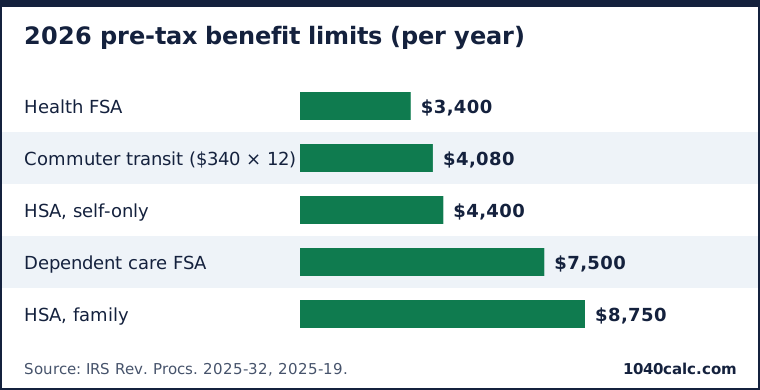
| Benefit | 2026 limit |
|---|---|
| Health flexible spending account (FSA) | $3,400 per employee |
| Health FSA carryover (if your plan allows) | $680 |
| Dependent care FSA | $7,500 per household ($3,750 married filing separately) |
| HSA (with a high-deductible plan) | $4,400 self-only · $8,750 family · +$1,000 at 55+ |
| Commuter transit pass / vanpool | $340 a month |
| Qualified parking | $340 a month |
| Employer adoption assistance exclusion | $17,670 |
| Educator expense deduction | $350 |
Health FSA: use it or lose it
Health FSA money is pre-tax, so a $3,400 election saves about $1,000 in federal income and payroll tax for someone in the 22% bracket. The catch: unspent money is forfeited at the end of the plan year unless your employer offers either a carryover (up to $680 into 2027) or a grace period of up to 2½ months — not both.
Spouses can each have their own $3,400 health FSA through their own employers.
Dependent care FSA rises to $7,500
For 2026, the One Big Beautiful Bill Act raised the dependent care assistance limit from $5,000 — unchanged since 1986 — to $7,500 per household. It covers daycare, preschool, before- and after-school care and summer day camp for children under 13, and care for a disabled spouse or dependent so you can work. The limit is not indexed for inflation.
FSA or HSA?
If you have a qualifying high-deductible health plan, an HSA usually beats a health FSA: it never expires, can be invested, and follows you between jobs. You can’t contribute to both a general health FSA and an HSA, but a “limited-purpose” FSA for dental and vision works alongside an HSA.
Remember to adjust withholding
Bigger pre-tax elections lower your taxable wages. If you also expect new deductions like tips or overtime, check your paycheck with the W-4 calculator.